search
Close
0%

Table of Contents

You know, I’ve been running around construction sites all year, and honestly, these days everyone's talking about automation, remote monitoring, and… well, just making everything “smart.” It's not about making things fancier, it's about getting the job done faster, cheaper, and with fewer headaches. But a lot of these "smart" solutions? They're designed by engineers who haven't spent a day wrestling with a wrench. Pipe thread rolling machines – now those are still the backbone, still getting it done. It’s funny, you think everything's going digital, but the need for solid, reliable threading hasn't gone anywhere. It's just…evolving.

I’ve seen so many designs that look great on paper but fall apart the minute you try to use them on a real job site. Have you noticed how often they forget about accessibility? Like, trying to change a die on a machine with limited space? Nightmare fuel. And the weight! Seriously, some of these things are back-breakers. Anyway, I think the biggest thing is understanding the end user. It’s not about features; it’s about usability and durability. If it doesn’t survive a drop or two, it’s just expensive scrap metal.

We primarily work with 4140 alloy steel for the rolls themselves – it’s got the toughness and wear resistance you need, smells kinda…metallic, I guess? Not a pleasant smell, but a reliable smell. You can feel the quality when you’re handling it. For the machine bodies, we usually go with cast iron, sometimes with a reinforced steel frame. It's heavy, no doubt about it, but it dampens vibrations and keeps everything stable. I encountered this at a factory in Ningbo last time, they were trying to use aluminum… lasted about a week.

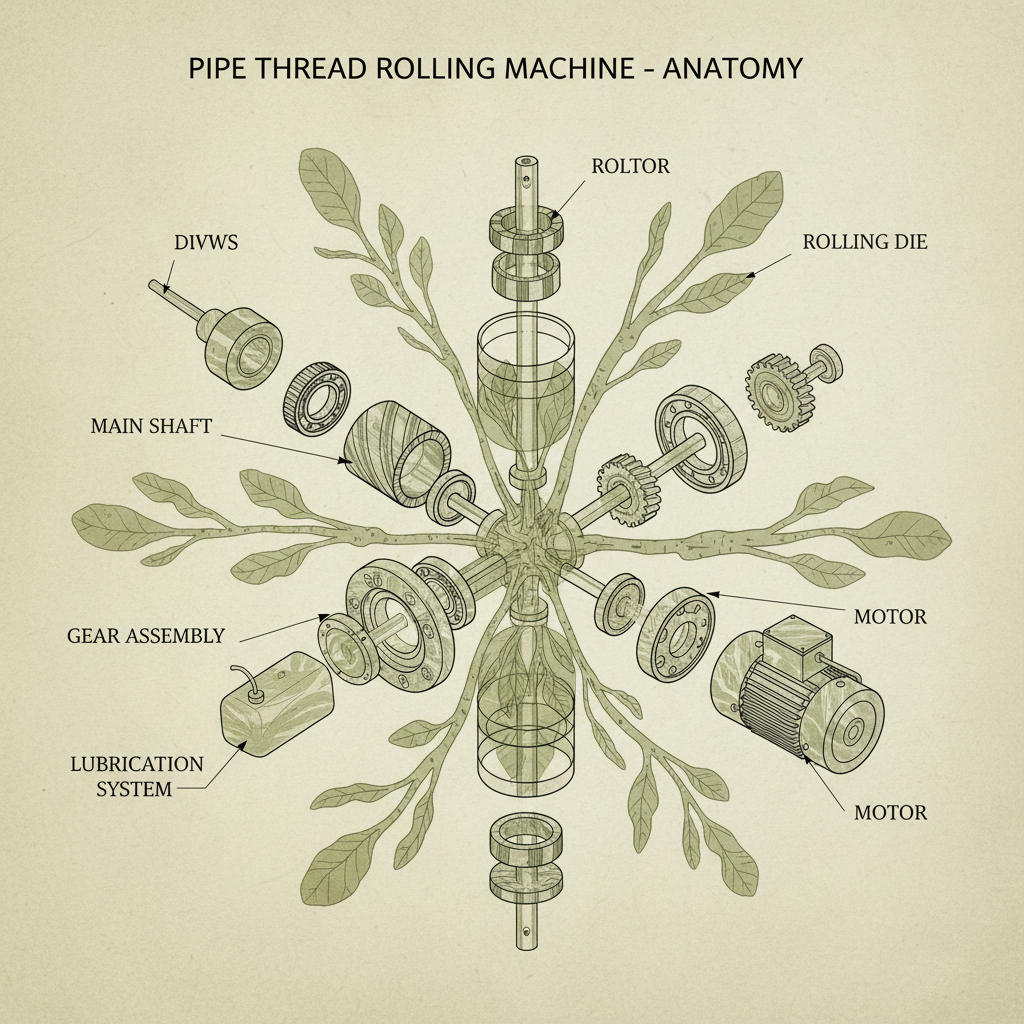
Essential Guide to Pipe Thread Rolling Machines and Their Practical Applications

The Current Landscape of Pipe Thread Rolling Machines

Essential Guide to Pipe Thread Rolling Machines and Their Practical Applications

Strangely, the demand for smaller, portable pipe thread rolling machine has really picked up. Not the huge, industrial ones, but stuff that a plumber can throw in the back of his van. It's all about versatility, I guess. People want to be able to handle jobs on-site without needing a crane to move the equipment. But it’s a trade-off, you lose some power and precision with smaller machines.

We’re also seeing a lot more interest in machines that can handle different materials – stainless steel, alloy steel, even some of the newer polymers. That requires a lot more fine-tuning and different die sets, of course. It’s not as simple as just swapping out a roll. It's getting complicated, faster.

Common Design Pitfalls and User Considerations

Honestly, the biggest mistake I see is over-engineering. People try to cram too many features into a machine, making it complicated and unreliable. A simple, robust design is always better. Another thing: ergonomics. I can’t tell you how many times I’ve seen machines where the handle is in the wrong place or the controls are difficult to reach. It’s frustrating for the operator and leads to accidents. You’ve gotta think about the guy who’s using it eight hours a day. He doesn't want a fancy gizmo, he wants something that works without fighting it.

Accessibility for maintenance is also crucial. If you can’t easily access the gears and bearings for lubrication and replacement, you’re looking at a lot of downtime. And that costs money.

And the documentation! Don’t even get me started. Half the time, it's written by someone who's never touched a pipe thread rolling machine in their life.

Material Selection: A Hands-On Perspective

We stick with high-carbon steels for the dies – they need to be hard enough to withstand the pressure without deforming. But they also need to be tough enough to avoid cracking. It’s a balancing act. And the coating is important, too. We use a titanium nitride coating on most of our dies, it significantly extends their lifespan.

The machine frames, as I said, are usually cast iron. It's cheap, it's stable, and it's easy to machine. But it's heavy! For lighter-duty machines, we sometimes use aluminum, but you have to be careful about reinforcement. You can’t just slap some aluminum plates together and expect it to hold up. It really depends on the application.

And the lubricant! Don't underestimate the lubricant. A good cutting oil can make a huge difference in the quality of the thread and the lifespan of the dies. It needs to be something that can handle the high pressures and temperatures. I’ve seen guys using everything from WD-40 to motor oil… it’s not a pretty sight.

Real-World Testing and Performance Analysis

Forget the lab tests, honestly. We do those, of course, to meet the standards. But the real test is putting the machine on a construction site and letting it run for a week. That's where you find out what's really going to break.

We send our prototypes to different contractors, different industries, and get their feedback. We ask them to push the machine to its limits, to abuse it a little bit. It’s not about finding out if it can work, it’s about finding out how it will work when it’s covered in mud, dust, and grease.

Pipe Thread Rolling Machine Performance Metrics


How Users Actually Utilize Pipe Thread Rolling Machines

You know, sometimes how people say they'll use something is different from how they actually use it. I’ve seen guys use these machines to do things I never would have dreamed of. Like, using them as makeshift clamps or even as a weight to hold something down. It's…resourceful.

A lot of times, they don't bother with the manual. They just figure it out as they go. Which is why simplicity is so important. And they definitely don't maintain them as often as they should. It’s always “it’s working fine, why fix it?” until it suddenly isn’t.

The Advantages and Disadvantages: A Pragmatic View

The biggest advantage, obviously, is speed and consistency. A good pipe thread rolling machine can thread a pipe in seconds, and the threads are always uniform. That’s a huge time saver. And it’s stronger than cutting threads with a die, too.

But they're not perfect. They're expensive, for one thing. And they require some training to operate properly. And if you’re only doing a few threads, it’s probably faster to just use a die. And sometimes…sometimes they just jam. It’s infuriating. I’ve spent hours wrestling with a jammed machine, trying to get it unstuck. Anyway, I think the key is to choose the right machine for the job.

There’s no one-size-fits-all solution.

Customization Options and Practical Applications

We can also modify the machines to handle different pipe sizes and materials. We’ve built machines that can thread everything from tiny copper pipes to huge steel pipelines. It’s all about understanding the specific needs of the customer.

And increasingly, people are asking for machines that can integrate with their existing automation systems. They want to be able to control the machine remotely and collect data on its performance.

Summary of Key Customization Parameters for Pipe Thread Rolling Machines

Die Set Compatibility Pipe Diameter Range Automation Integration Material Compatibility
NPT, BSP, Metric 1/8" - 4" Modbus, Ethernet/IP Steel, Stainless Steel, Copper
Custom Die Design Up to 6" (Special Order) PLC Control Aluminum, Titanium
Quick Change Die System 2" - 8" Remote Monitoring PVC, CPVC
Precision Ground Dies Micro Pipe Sizes Data Logging Brass
Extended Die Life Coating Heavy Wall Pipe Wireless Connectivity Special Alloys
Automated Die Selection Variable Pipe Wall Thickness Error Reporting Composite Materials

FAQS

What’s the best way to maintain a pipe thread rolling machine to maximize its lifespan?

Regular lubrication is key – we recommend a high-quality cutting oil. Clean the dies after each use, and check the bearings for wear. Also, don’t over-tighten the clamping mechanism. It’s tempting to crank it down, but you'll just damage the machine. And keep an eye on the power supply, voltage fluctuations can mess things up. Honestly, a little preventative maintenance goes a long way. Don't wait 'til it breaks down to start caring.

How do I choose the right die set for my specific application?

Material compatibility is the big one. Steel dies for steel pipes, stainless steel dies for stainless steel, and so on. Also, consider the thread type – NPT, BSP, metric. And the pipe size, obviously. If you're unsure, consult the machine's manual or contact a specialist. Using the wrong die set can damage the machine and the pipes. It's not worth the risk. We’ve got charts and guides to help with this, just ask.

What safety precautions should I take when operating a pipe thread rolling machine?

Wear safety glasses, always. And gloves. Keep your hands clear of the moving parts. Make sure the machine is properly grounded. And don’t operate it if you’re tired or distracted. These machines are powerful, and a moment of carelessness can lead to a serious injury. It’s not glamorous, but safety first, always. Common sense, really.

Can I use a pipe thread rolling machine on pipes with coatings?

It depends on the coating. Some coatings can be damaged by the rolling process. If you're using a coated pipe, you might need to use a different die set or adjust the rolling pressure. It’s best to test it on a scrap piece of pipe first to see how it holds up. And if you’re unsure, consult with the coating manufacturer. They’ll have the best advice. Don't assume, test!

What are the common causes of thread defects when using a pipe thread rolling machine?

Usually, it's due to improper setup, worn dies, or insufficient lubrication. Make sure the pipe is properly clamped and aligned. Check the dies for wear and tear. And apply enough cutting oil. Also, check the rolling pressure – too much or too little can cause defects. If you’re still having problems, try slowing down the rolling speed. Sometimes, a slower speed can improve the quality of the thread.

How does the cost of a pipe thread rolling machine compare to other threading methods?

Upfront, a pipe thread rolling machine is more expensive than a manual die set. But over the long run, it can be more cost-effective. It’s faster, more consistent, and produces stronger threads. That reduces waste and downtime. Plus, it requires less physical effort. So, while the initial investment is higher, the return on investment can be significant, especially for high-volume applications. It’s not just about the price tag, it’s about the total cost of ownership.

Conclusion

So, yeah, pipe thread rolling machines – they aren’t flashy, they aren’t cutting-edge, but they’re still essential for a huge range of industries. They’re reliable, durable, and they get the job done. The industry is moving towards automation and integration, but the core principles remain the same: solid materials, precise engineering, and a good understanding of the application. It’s all about choosing the right tool for the job and keeping it well-maintained.

Ultimately, whether this thing works or not, the worker will know the moment he tightens the screw. If it feels solid, if it doesn’t leak, if it holds, then it's a good machine. And that’s all that really matters. If you're looking for a reliable pipe thread rolling machine, check out our website: www.machineyingyee.com.
David Miller

David Miller

David Miller serves as the Senior Sales Engineer at YingYee Machinery and Technology Service Co., Ltd. With over 15 years of experience in the metal processing industry, David is a key figure in expanding YingYee’s presence in the North American market. He specializes in understanding client needs and providing tailored
Previous Aashto Guardrail Cold Bending Machine Innovations and Practical Applications
Next Optimizing Storage Solutions with Advanced Storage Rack Roll Forming Machine
What can we do to help you?