The global demand for efficient and adaptable supermarket shelving solutions is consistently rising, driven by evolving consumer habits and the expanding retail sector. Supermarket shelf panel roll forming machine technology has emerged as a critical component in meeting this demand, enabling the cost-effective and high-volume production of standardized shelf panels. Understanding the intricacies of this machinery is crucial for retailers, manufacturers, and equipment suppliers seeking to optimize their operations and maintain a competitive edge.
The proliferation of self-service retail formats worldwide necessitates a constant supply of durable and versatile shelving. Supermarket shelf panel roll forming machine addresses this need by automating the process of creating these essential components. The ability to quickly and efficiently manufacture panels with consistent quality is paramount to maintaining smooth supply chains and minimizing operational disruptions, especially within the fast-paced retail environment.
This technology isn’t simply about production volume; it's about precision, customization, and sustainability. Modern supermarket shelf panel roll forming machine units offer capabilities to create panels with varying profiles, coatings, and materials, catering to diverse retail aesthetic and functional requirements. This adaptability, combined with material efficiency, positions this machinery as a cornerstone of modern supermarket infrastructure.
The Importance of Supermarket Shelf Panel Roll Forming Machine
The efficiency of a supermarket directly impacts profitability, and a significant factor in that efficiency is the quality and availability of shelving. Supermarket shelf panel roll forming machine provides a robust solution for consistently producing the shelving components needed to support retail operations, reducing reliance on manual fabrication and imported goods. This is particularly crucial in areas with growing retail sectors and supply chain vulnerabilities.
The ability to rapidly deploy and adapt shelving configurations is also vital. A supermarket shelf panel roll forming machine enables quick adjustments to meet seasonal demands, promotional displays, or changes in product offerings, providing a flexible and responsive retail environment. This agility translates directly into improved sales and customer satisfaction.
Defining Supermarket Shelf Panel Roll Forming Machine
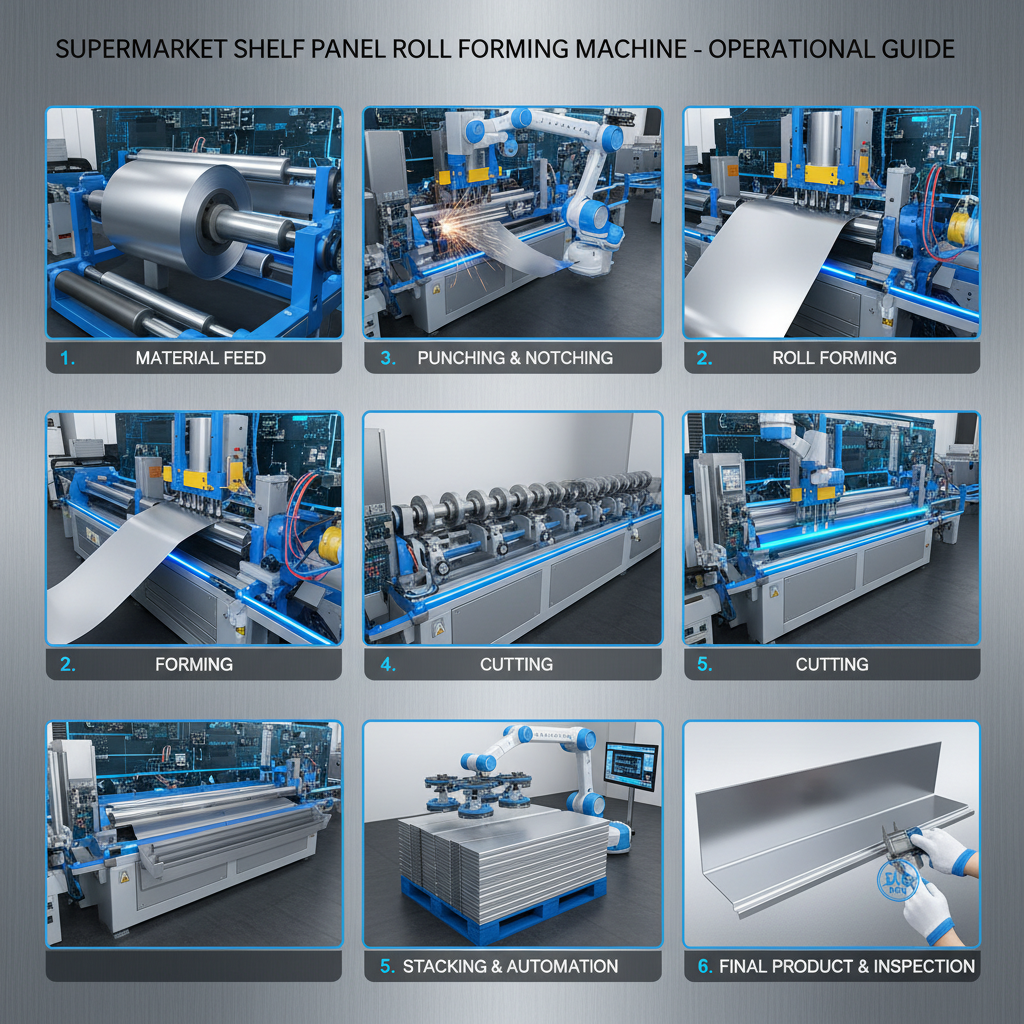
A supermarket shelf panel roll forming machine is an automated system designed to continuously bend a flat metal coil into a specific profile, creating the panels used in supermarket shelving systems. The process involves feeding the metal coil through a series of rollers, each shaped to incrementally form the desired panel shape. This continuous process allows for high-volume production with consistent dimensions and quality.
Essentially, it transforms raw material – typically steel or aluminum – into finished shelf panels ready for assembly. These panels are then often coated with protective finishes like powder coating or galvanization to enhance durability and resistance to corrosion, making them suitable for the demanding supermarket environment.
Unlike traditional fabrication methods like cutting and welding, roll forming is a more efficient and cost-effective approach, especially for large-scale production. It minimizes material waste and reduces labor costs, contributing to lower overall shelving expenses for retailers.
Key Factors in Supermarket Shelf Panel Roll Forming Machine Performance
Production Speed: The rate at which the machine can produce panels is a critical factor, impacting overall output and the ability to meet demand. Higher production speeds translate to lower per-unit costs. Supermarket shelf panel roll forming machine manufacturers continually strive to increase throughput through optimized designs and advanced control systems.
Material Compatibility: The ability to process different types of metal – steel, aluminum, stainless steel – and varying thicknesses is essential for versatility. A machine that can handle a wider range of materials allows retailers to choose the most appropriate option based on cost, durability, and aesthetic requirements.
Precision and Accuracy: Consistent panel dimensions and profile accuracy are vital for ensuring proper shelving assembly and stability. High-precision roll forming machines minimize variations, resulting in shelves that are both functional and aesthetically pleasing. Regular maintenance and calibration are essential to maintain this accuracy.
Global Applications and Use Cases
Supermarket shelf panel roll forming machine are utilized globally by shelving manufacturers supplying retailers in diverse markets. Regions with rapidly expanding retail sectors, such as Asia-Pacific and Latin America, represent significant demand centers. The United States and Europe also maintain a substantial need for consistent shelving supply.
Beyond supermarkets, these machines are used to produce shelving for convenience stores, hardware stores, and warehouse facilities. The adaptability of roll forming allows for the creation of panels for various applications beyond food retail, extending the market reach of manufacturers.
In post-disaster relief operations, quickly deployable shelving systems are essential for distributing supplies. Supermarket shelf panel roll forming machine can contribute to rapid production of these systems, enabling efficient aid distribution in affected areas.
Supermarket Shelf Panel Roll Forming Machine Performance Metrics
Advantages and Long-Term Value
The primary advantage of using a supermarket shelf panel roll forming machine is significant cost reduction. Automated production minimizes labor requirements and material waste, leading to lower per-unit costs compared to traditional methods. This cost-effectiveness is particularly important for large retailers operating on tight margins.
From a sustainability perspective, roll forming is a relatively clean and efficient process. It generates less waste than cutting and welding, and modern machines can be designed to minimize energy consumption. Investing in a supermarket shelf panel roll forming machine demonstrates a commitment to environmentally responsible manufacturing.
Future Trends and Innovations
Integration with Industry 4.0 principles is a key trend. Smart supermarket shelf panel roll forming machine will incorporate sensors, data analytics, and machine learning to optimize production processes, predict maintenance needs, and enhance quality control. Real-time monitoring and adjustments will become increasingly common.
The development of new materials and coatings is also driving innovation. Lighter and stronger alloys, as well as more durable and environmentally friendly coatings, will improve the performance and longevity of shelving systems. Focus is shifting toward creating sustainable and recyclable shelving options.
Challenges and Solutions
One common challenge is maintaining precision over extended production runs. Tool wear and material variations can lead to inconsistencies in panel dimensions. Implementing robust quality control procedures, including regular tool inspection and automated measurement systems, can mitigate this issue.
Another challenge is adapting to changing retail trends and the need for customized shelving solutions. Investing in flexible machine designs that can quickly switch between different panel profiles and incorporating automated changeover systems can address this need.
Skilled operator training is also critical. Proper training ensures that operators can effectively manage the machine, troubleshoot issues, and maintain optimal performance. Ongoing professional development is essential to keep pace with evolving technology.
Key Considerations for Supermarket Shelf Panel Roll Forming Machine Optimization
| Material Type |
Production Volume |
Maintenance Schedule |
Operator Skill Level |
| Steel (High Tensile Strength) |
High Volume (100,000+ panels/year) |
Preventative – Quarterly Inspections |
Intermediate – Requires 2+ years of experience |
| Aluminum (Lightweight) |
Medium Volume (20,000-100,000 panels/year) |
Preventative – Bi-Annual Inspections |
Beginner – Requires 6-12 months of training |
| Galvanized Steel (Corrosion Resistant) |
Variable (Dependent on Climate) |
Corrective – As needed based on usage |
Intermediate – Requires 1-2 years of experience |
| Stainless Steel (Premium Finish) |
Low Volume (Under 20,000 panels/year) |
Advanced – Annual Comprehensive Overhaul |
Advanced – Requires 5+ years of experience |
| Pre-Painted Steel (Reduced Finishing) |
Medium to High Volume |
Regular – Lubrication and Cleaning |
Intermediate |
| Recycled Aluminum (Sustainable) |
Variable – Dependent on Supply |
Proactive – Monitoring for Material Variations |
Beginner to Intermediate |
FAQS
The lifespan of shelving produced by a roll forming machine depends heavily on the material used and the operating environment. Galvanized steel and stainless steel shelving can last 15-20 years or even longer with proper maintenance. Aluminum shelving generally has a lifespan of 10-15 years. Factors like humidity, temperature, and load weight also influence durability. Regularly inspecting and addressing corrosion or damage will significantly extend the shelving's service life.
Modern supermarket shelf panel roll forming machine offer a considerable degree of customization. While the basic profile shape is determined by the rollers, it’s possible to adjust parameters like panel width, length, and coating. Changing the roller dies allows for different profile designs. Furthermore, options like punched holes for accessories or specific edge finishes can be incorporated, making it suitable for a broad range of display requirements.
The initial investment in a roll forming machine is higher than purchasing individual shelving components or using manual fabrication methods. However, the long-term cost savings are significant. Roll forming offers lower per-unit costs, reduced labor expenses, and minimal material waste. For high-volume production, it’s the most cost-effective solution. The ROI is typically achieved within 2-5 years, depending on production volume.
Safety is paramount in roll forming machine design. Common features include emergency stop buttons, light curtains to prevent access to moving parts, safety guards around rollers, and automatic shut-off systems. Many machines also incorporate overload protection to prevent damage. Regular safety inspections and operator training are crucial to ensure a safe working environment.
Regular maintenance is essential for optimal performance and longevity. This includes lubricating moving parts, inspecting rollers for wear, tightening bolts, and cleaning the machine. Preventative maintenance schedules, typically quarterly or bi-annually, should be followed. Replacing worn rollers and bearings is a key maintenance task. Proper maintenance minimizes downtime and extends the machine’s lifespan.
Lead times vary depending on the machine's complexity and the manufacturer’s production schedule. Generally, expect a lead time of 8-16 weeks from order placement to delivery. Installation typically takes an additional 1-2 weeks, depending on site preparation requirements. Proper electrical connections, compressed air supply, and foundation stability are crucial for a successful installation.
Conclusion
In conclusion, supermarket shelf panel roll forming machine represent a vital technology for modern retail operations. They offer a compelling combination of cost-effectiveness, production efficiency, and customization capabilities, enabling retailers and manufacturers to meet the evolving demands of the market. The long-term benefits extend beyond mere cost savings to include enhanced sustainability and operational agility.
Looking ahead, the integration of advanced technologies like Industry 4.0 and the development of more sustainable materials will further solidify the importance of these machines. Investing in a supermarket shelf panel roll forming machine is a strategic decision that positions businesses for long-term success in a competitive landscape. For more information and to explore our range of solutions, visit our website: supermarket shelf panel roll forming machine.