When procurement managers evaluate the cold bending price for industrial structural components, they often encounter a significant gap between the initial quote and the actual total cost of ownership. The price of cold forming isn't merely a reflection of raw material costs; it is a complex calculation involving tooling precision, material yield, and the technical capacity of the roll forming line to maintain dimensional stability without heat treatment. Understanding these drivers is essential for optimizing budgets in heavy-duty manufacturing.
The financial implications of cold bending are particularly critical when integrating these components into high-volume systems. For instance, producing structural box beams for warehouse racking requires a seamless transition from flat steel coils to rigid profiles. If the equipment lacks the precision to handle springback, the resulting scrap rates can inflate the effective cold bending price far beyond the nominal per-meter cost, impacting the profitability of logistics infrastructure projects.
This analysis examines the variables that dictate pricing in the metal processing industry, shifting the focus from simple unit costs to long-term operational efficiency. By exploring the technical requirements of modern roll forming and the specific capabilities of professional machinery, we provide a framework for buyers to evaluate cold bending price based on value and technical reliability rather than the lowest bid.


Cold roll forming is a continuous bending operation that progressively shapes a long strip of metal into a desired profile through a series of rollers. Unlike press braking, which bends metal in single hits, this process distributes the deformation across multiple stations, which minimizes internal stress and ensures that the material maintains its structural integrity. For high-volume production, this method is the most cost-effective way to achieve complex cross-sections with tight tolerances.
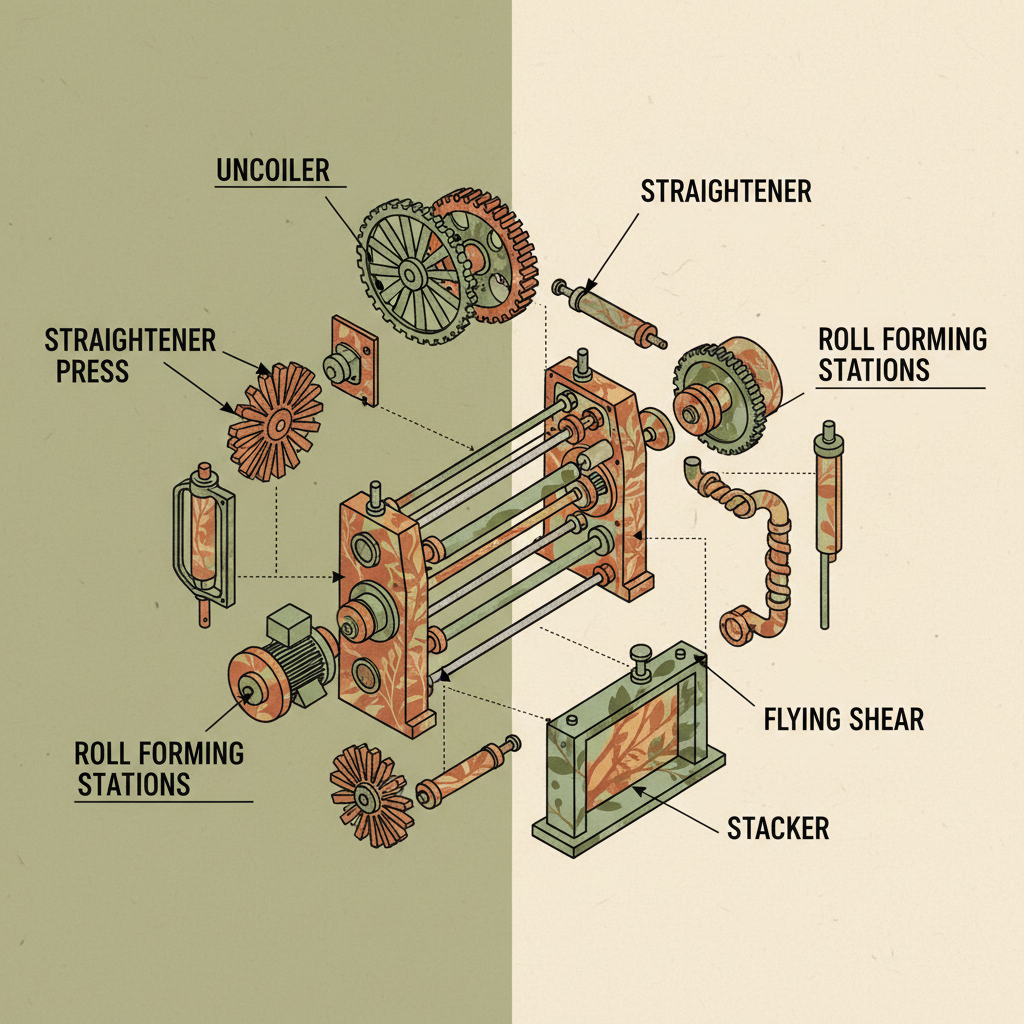
In the context of Storage Box Beam Forming Machines, the process involves a complete inline sequence: decoiling, leveling, optional pre-punching, and then the actual roll forming. The final stage usually includes a flying cut-off to ensure precise lengths without stopping the line. This seamless flow is what allows manufacturers to reduce the cold bending price per unit by maximizing throughput and minimizing manual handling.
The cost of cold bending is heavily influenced by the quality of the alloy rollers used in the machine. High-strength alloy rollers are essential for ensuring stable forming and minimizing "springback"—the tendency of metal to return to its original shape after bending. When rollers are poorly engineered, the machine requires more frequent adjustments, increasing labor costs and slowing down production speed, which directly raises the operational price.
Precision in PLC-controlled systems with touchscreen HMI interfaces significantly reduces the cost of changeovers. By allowing operators to quickly adjust parameters for different material thicknesses—ranging from 1.0 mm to 3.0 mm—companies can handle diverse product lines without expensive downtime, effectively lowering the total cost per part.
Furthermore, the integration of servo flying saws or hydraulic shears plays a role in the final cost. A clean, burr-free cut reduces the need for secondary finishing processes. When a machine can deliver a finished product that is ready for immediate assembly or painting, the "hidden" costs of production are eliminated, providing a more competitive price point for the end customer.
Value engineering in the metallurgy sector involves optimizing the ratio between material usage and structural strength. In the production of closed-section box beams, the ability to maintain consistent dimensional accuracy is the primary indicator of value. A machine that ensures a perfectly square profile increases the load-bearing capacity of the final storage rack, reducing the total amount of steel required for the project.
By analyzing the relationship between roller precision and material waste, manufacturers can identify the optimal operational window. Higher initial investment in a fully automatic line often yields a lower long-term cost due to the reduction in scrap and the elimination of human error during the punching and cutting phases.
Cold formed box beams are the backbone of modern logistics and warehousing. They are primarily utilized in the construction of pallet racking systems and Automated Storage & Retrieval Systems (AS/RS). These applications demand high-strength, rigid profiles that can withstand immense vertical loads without buckling, making the precision of the cold bending process a critical safety requirement.
Beyond warehousing, these profiles are essential for industrial shelving and heavy-duty storage solutions. Because the process supports both solid and perforated profiles, manufacturers can create beams that allow for easier assembly or integrated cable management, expanding the utility of the product across various industrial infrastructure sectors.
The transition toward fully automatic roll forming lines marks a shift from labor-intensive workshops to high-precision manufacturing hubs. Modern systems now integrate decoiling and leveling directly into the forming line, removing the need for intermediate storage and transport. This integration is key to reducing the lead time and the overall cold bending price by streamlining the workflow.
We are also seeing an increase in the adoption of multi-voltage options and remote technical support, which are vital for international markets. When a machine can be diagnosed and optimized remotely, the risk of extended downtime is mitigated, ensuring that production schedules remain on track regardless of the geographic location of the factory.
Future developments are likely to focus on even greater material flexibility and the integration of smarter sensors to detect material inconsistencies in real-time. This will allow the machine to adjust roller pressure dynamically, further reducing waste and improving the consistency of the structural profiles.
Purchasing metal processing equipment involves balancing the upfront capital expenditure against the expected lifecycle value. A common mistake is selecting a machine based solely on the lowest initial price without considering the cost of maintenance or the quality of the rollers. Inexpensive rollers wear down faster, leading to dimensional drift and increased waste.
To mitigate these risks, buyers should focus on CE certification and the availability of long-term technical support. Ensuring that the equipment can handle the specific material thicknesses required—such as the 1.0 mm to 3.0 mm range—prevents the need for premature equipment replacement as product demands evolve.
A structured evaluation of the supplier's design and research capabilities is also essential. Reliability in the field is often the result of rigorous testing and a deep understanding of international business rules and regulations, which ensures that the machinery meets the safety and quality standards of the target market.
| Evaluation Factor | Low-Cost Option | Professional Grade | Impact on ROI |
|---|---|---|---|
| Roller Material | Standard Steel | High-Strength Alloy | Lower Wear Rate |
| Control System | Manual/Basic | PLC with Touch HMI | Faster Setup |
| Cutting Method | Simple Shear | Servo Flying Saw | Zero-Waste Length |
| Material Range | Fixed Thickness | 1.0mm - 3.0mm (Adj) | Product Versatility |
| Certifications | None/Local | CE Certified | Market Compliance |
| Support | Email Only | 24/7 Remote Tech | Minimized Downtime |
The primary drivers are material costs, tooling precision, and production volume. High-quality alloy rollers reduce springback and scrap, lowering the cost per unit. Additionally, the level of automation—such as integrated PLC controls and servo cutting—reduces labor costs and minimizes waste, which significantly lowers the total operational price compared to manual processes.
Yes, professional roll forming lines often include an optional pre-punching station before the forming process begins. This allows the machine to create perforated profiles that are ideal for specific warehouse racking designs or integrated logistics systems, all while maintaining the speed and consistency of a fully automatic line.
Material thickness determines the required strength of the rollers and the power of the drive system. A versatile machine, such as those supporting 1.0 mm to 3.0 mm, allows manufacturers to switch between light-duty shelving and heavy-duty structural beams without investing in multiple production lines, thereby optimizing capital expenditure.
A hydraulic shear typically requires the line to slow down or stop to make a cut, while a servo flying saw moves with the material to cut it at full production speed. This allows for continuous high-volume output and more precise length control, which is crucial for reducing waste and maintaining a competitive cold bending price.
CE certification ensures that the machinery meets essential health, safety, and environmental protection standards for the European Economic Area. For international buyers, this certification provides a guarantee of build quality and safety compliance, reducing the risk of regulatory issues and ensuring the machine's reliability in a professional industrial setting.
ROI should be calculated by comparing the increase in production speed and the reduction in material waste against the monthly financing cost of the machine. Focus on the reduction in labor hours (via automation) and the decrease in secondary finishing costs (via precision cutting) to determine the actual payback period.
Determining the true value of a cold bending price requires a shift from looking at the lowest single-unit cost to analyzing the total efficiency of the production line. The combination of high-strength alloy rollers, PLC-driven precision, and integrated inline processing ensures that structural box beams are produced with minimal waste and maximum load-bearing capacity. For manufacturers in the logistics and shelving industries, these technical details are the difference between a profitable operation and one plagued by high scrap rates and downtime.
Selecting a partner with a strong background in design, research, and international service is essential for long-term success. By focusing on certified, automated equipment that offers flexibility in material thickness and remote technical support, companies can secure a sustainable competitive advantage. For those looking to optimize their metal processing capabilities and explore high-precision roll forming solutions, further technical details and configurations are available at www.machineyingyee.com.