

High Performance Standing Seam Roof Rolling Door Machine Factory
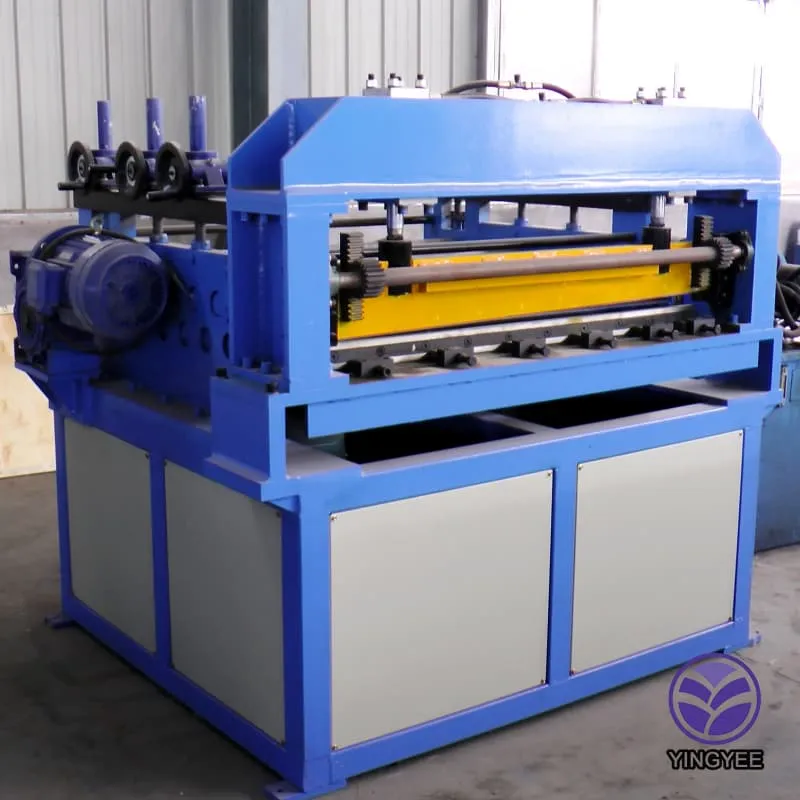
Selecting a high-performance cold-forming system for architectural metalwork requires a balance between precision engineering and operational throughput. The Roof Sheet Standing Seam Making Machine is engineered to meet these exact demands, providing a continuous rolling process that transforms pre-painted, galvanized, or aluminum coils into interlocking standing seam profiles. For operators in the prefab steel structure building sector, this equipment eliminates the need for traditional fasteners, significantly reducing leak risks and improving the structural integrity of the roof.
This system integrates a sophisticated PLC control unit with hydraulic cutting capabilities to ensure that every sheet is produced to exact specifications with minimal material waste. Whether you are scaling up a production facility or optimizing a specialized workshop, understanding the technical synergy between the decoiler, feeding guide, and main roll forming unit is essential for maximizing productivity and ensuring a consistent finish across large-scale projects.

Engineering Logic of Cold-Formed Standing Seam Profiles
The core of the standing seam process lies in the incremental deformation of the steel sheet. Unlike press-braking, which creates sharp bends and stresses the material, this machine utilizes 12 to 20 rows of rollers made from 45# steel with a chromed finish. This ensures a smooth transition of the material, preserving the protective coating of pre-painted or galvanized coils while achieving the precise interlocking geometry required for weather-tight roofing.
Precision is further maintained by the 70mm diameter shafts made from 40 Cr material, which prevent deflection during high-pressure rolling. The working flow is logically sequenced to maintain tension and alignment: the Decoiler feeds the coil into a Feeding Guide, which then enters the Main Roll Forming Machine. This seamless transition is critical for avoiding ripples or twists in the final profile, especially when working with thin materials ranging from 0.2mm to 1mm.
- Material Versatility: Compatible with Aluminum, Galvanized, and Pre-painted steel.
- Structural Rigidity: Cold-formed frames provide the basis for prefab steel buildings.
- Interlocking Design: Creates a secure mechanical bond without penetrating the metal surface.

Control Systems and Hydraulic Precision Cutting
Automation is handled by an Omron PLC system, which allows the operator to program precise lengths and quantities. This digital control reduces human error and ensures that the forming speed, typically ranging between 10-15m/min, remains constant regardless of the material thickness. By synchronizing the motor power (4KW main motor) with the PLC timing, the system achieves a high level of repeatability across hundreds of sets per year.
The cutting phase is where the machine's durability is most evident. Utilizing Cr12 mould steel with quenched treatment (58-62℃), the hydraulic cutter performs clean, perpendicular cuts without deforming the profile edges. The 3KW hydraulic motor provides the necessary force to slice through aluminum or steel instantly, ensuring that the production flow is not interrupted by slow or imprecise manual trimming.
Application Scenarios in Modern Steel Construction
This equipment is specifically designed for the prefab steel structure industry, where speed of assembly and long-term durability are paramount. Standing seam roofs are widely preferred for industrial warehouses, commercial hangars, and modern residential architecture because they allow the metal to expand and contract with temperature changes without loosening the fasteners.
From a procurement perspective, the ability to process various materials—from lightweight aluminum to heavy-duty galvanized steel—makes this machine a versatile asset. It is particularly effective for projects requiring "hidden" fastening systems, where the aesthetic and functional requirement is a smooth, fastener-free exterior. The output table ensures that the finished profiles are supported and easy to stack for transportation to the job site.
Technical Specification and Performance Matrix
| Technical Parameter | Specification Detail | Material Requirement | Performance Impact |
|---|---|---|---|
| Roller Configuration | 12-20 Rows | 45# Steel (Chromed) | High Profile Accuracy |
| Cutting System | Hydraulic Mode | Cr12 Mould Steel | Clean Edge Finishing |
| Thickness Range | 0.2mm - 1.0mm | Steel / Aluminum | Versatile Application |
| Forming Speed | 10-15 m/min | Omron PLC Control | Optimized Throughput |
| Power System | 380V / 3Phase / 5Hz | 4KW Main / 3KW Hyd | Industrial Stability |
Evaluating Supplier Capabilities for Metal Process Equipment
When sourcing from a rolling door machine factory or any specialized metal equipment provider, buyers must evaluate the synergy between design and after-sales support. Reliability in the metal processing industry is not just about the machine's hardware but also about the manufacturer's adherence to international business rules and technical standards. Certifications like CE and ISO9001 serve as a baseline for quality management and safety.
A strong design and research team allows for the customization of voltage and technical parameters to meet specific local grid requirements. Furthermore, the ability to provide a 12-month warranty and professional service indicates a supplier's confidence in their product's longevity. For international buyers, the packaging (such as NUDE packaging for ocean freight) and delivery timelines (typically 30 days) are critical factors in project scheduling.
Future Trends in Cold-Forming Technology
The industry is moving toward higher degrees of integration and smarter automation. We are seeing a shift toward systems that can handle multiple profile widths on a single line and the integration of IoT for real-time production monitoring. The demand for sustainable, recyclable building materials is also driving the need for machines that can process thinner, higher-strength alloys without compromising the interlocking strength of the seam.
For business owners, investing in PLC-driven equipment now ensures that their production line remains compatible with future software upgrades. As the prefab construction market grows, the focus will shift from simple production to "precision manufacturing," where the tolerance levels of the roll-formed sheets determine the overall speed of the building's assembly on-site.
Technical FAQ for Standing Seam Machine Procurement
What is the primary advantage of a standing seam roof over traditional corrugated sheets?
The primary advantage is the interlocking design which eliminates the need for piercings (screws/nails) through the metal surface. This significantly reduces the risk of water leakage and allows for thermal expansion and contraction of the metal without stressing the fasteners.
Can this machine process different types of metal coils?
Yes, the machine is designed to work with pre-painted coils, galvanized coils, and aluminum coils, provided the material thickness falls within the 0.2mm to 1mm range.
How does the Omron PLC system improve production efficiency?
The PLC system automates the length measurement and cutting process. It allows operators to set precise dimensions and quantity counts, reducing material waste and eliminating the manual measurement time associated with older mechanical systems.
What maintenance is required for the Cr12 cutting blades?
Because the blades are made from quenched Cr12 mould steel (58-62℃), they are highly wear-resistant. Regular inspection for debris and periodic lubrication of the hydraulic cutting cylinder are typically sufficient to maintain performance.
What should I consider regarding electrical requirements for this machine?
The standard configuration is 380V/3Phase/5Hz, but the manufacturer can adjust the voltage and frequency to meet the customer's specific request based on their local power grid standards.
What is the typical lead time and warranty for this equipment?
The typical delivery time is 30 days from order confirmation, and the equipment comes with a 12-month warranty to ensure operational reliability.
Industry Technical References
- ISO Standards for Industrial Machinery Safety
- American Institute of Steel Construction (AISC) Guidelines
- Eurocodes for Steel Structure Design
- World Steel Association - Material Specifications
Investing in precision cold-forming equipment is a strategic move for any metal processing business aiming for higher quality and efficiency. By focusing on technical specifications such as roller material and control system accuracy, you can ensure your production line meets the rigorous demands of modern architecture.
Related Industrial Equipment News






 English
 Afrikaans
 Albanian
 Amharic
 Arabic
 Armenian
 Azerbaijani
 Basque
 Belarusian
 Bengali
 Bosnian
 Bulgarian
 Catalan
 Cebuano
 China
 China (Taiwan)
 Corsican
 Croatian
 Czech
 Danish
 Dutch
 Esperanto
 Estonian
 Finnish
 French
 Frisian
 Galician
 Georgian
 German
 Greek
 Gujarati
 Haitian Creole
 Hausa
 Hawaiian
 Hebrew
 Hindi
 Miao
 Hungarian
 Icelandic
 Igbo
 Indonesian
 Irish
 Italian
 Japanese
 Javanese
 Kannada
 Kazakh
 Khmer
 Rwandese
 Korean
 Kurdish
 Kyrgyz
 Lao
 Latin
 Latvian
 Lithuanian
 Luxembourgish
 Macedonian
 Malgashi
 Malay
 Malayalam
 Maltese
 Maori
 Marathi
 Mongolian
 Myanmar
 Nepali
 Norwegian
 Norwegian
 Occitan
 Pashto
 Persian
 Polish
 Portuguese
 Punjabi
 Romanian
 Russian
 Samoan
 Scottish Gaelic
 Serbian
 Sesotho
 Shona
 Sindhi
 Sinhala
 Slovak
 Slovenian
 Somali
 Spanish
 Sundanese
 Swahili
 Swedish
 Tagalog
 Tajik
 Tamil
 Tatar
 Telugu
 Thai
 Turkish
 Turkmen
 Ukrainian
 Urdu
 Uighur
 Uzbek
 Vietnamese
 Welsh
 Bantu
 Yiddish
 Yoruba
 Zulu