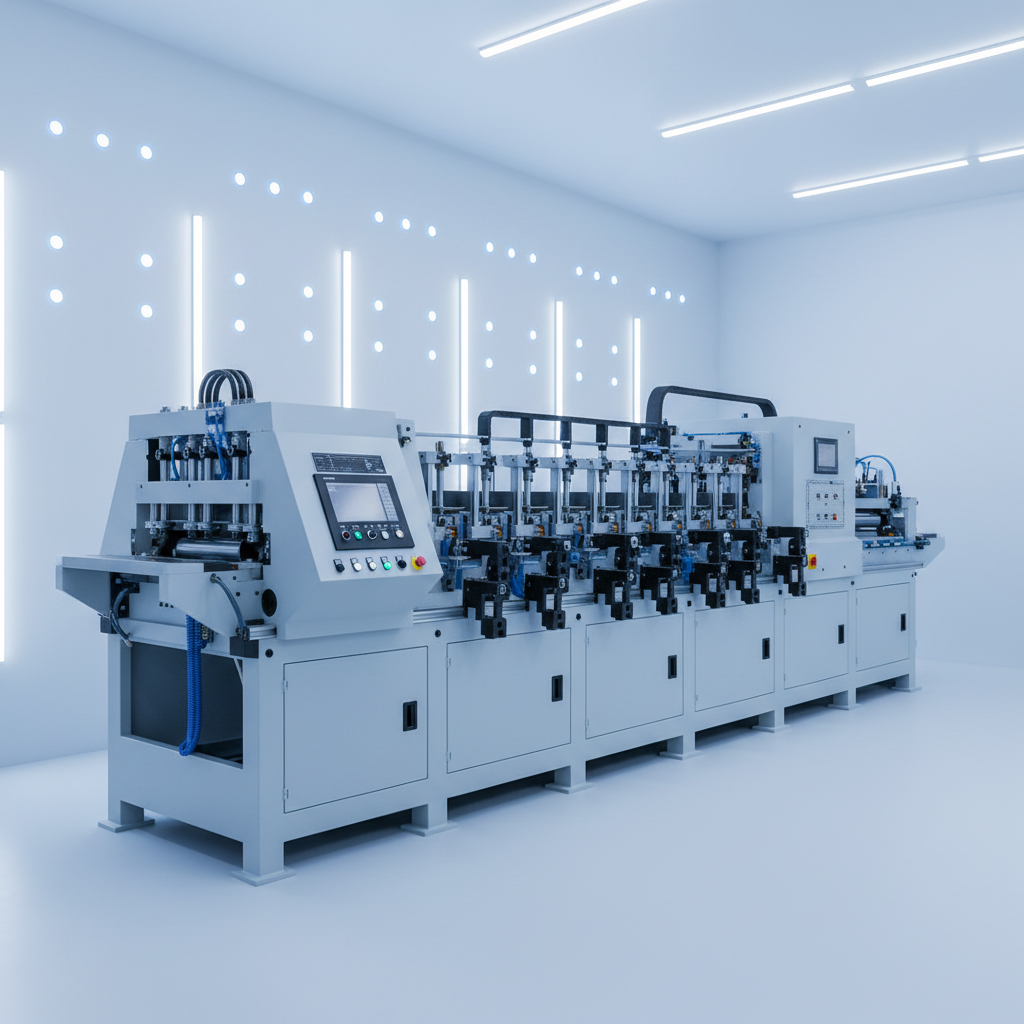
Selecting a structural component supplier involves more than comparing price lists; it requires an assessment of metallurgical precision and production scalability. For projects requiring cold-formed steel supports, finding a reliable c purlin manufacturer in china is often a strategic decision to balance material costs with structural integrity.
The shift toward automated roll forming has transformed how these components are produced, moving away from manual bending toward high-speed, continuous profile generation. This transition ensures that every linear meter of steel maintains a consistent cross-section, which is critical for the load-bearing calculations of industrial warehouses and commercial roofing.
Understanding the intersection of machine precision and material grade is essential for procurement managers. This analysis explores the technical frameworks of C-purlin production and the criteria used to evaluate high-capacity manufacturing partners.


The C-purlin is a fundamental element in portal frame buildings, acting as the primary horizontal support for roof sheeting. Its geometry—consisting of a web and two flanges—is specifically engineered to resist bending moments while remaining lightweight. This efficiency reduces the overall dead load of the structure without sacrificing stability.
From a manufacturing perspective, the "C" shape is achieved through a sequence of gradual bends. When sourcing from a c purlin manufacturer in china, the focus is usually on the "lip" of the flange, which prevents the flange from buckling under compressive stress.
The production of high-quality purlins relies on the principle of incremental deformation. Unlike press braking, where the metal is bent in a single motion, roll forming passes the steel coil through a series of rollers. Each set of rollers bends the material a few degrees more than the previous set, minimizing internal stress and preventing material fracture.
Key technical components include the uncoiler, the forming stands, and the hydraulic cutting system. For an automatic C/Z purlin roll forming machine, the integration of PLC (Programmable Logic Controller) systems allows for precise length control and synchronized cutting, which is essential for reducing scrap rates in high-volume production.
Material compatibility is another critical factor. The process must be calibrated for different steel grades, including galvanized and PPGI coils. The pressure applied by the rollers must be perfectly balanced to avoid "oil canning" or twisting of the profile, ensuring the final product meets stringent architectural tolerances.
Precision in roll forming is measured by the deviation of the final profile from the theoretical CAD design. Even a few millimeters of variance in the flange width can lead to misalignment during the assembly phase of a building, causing significant delays and increasing labor costs on-site.
The reliability of a structural profile is determined by the consistency of its thickness and the accuracy of its bend angles; any variance in the roll forming sequence directly impacts the load-bearing capacity of the final installation.
To ensure this precision, advanced manufacturers employ rigid frames and heavy-duty components. For example, YingYee Machinery and Technology Service Co., Ltd. emphasizes the use of robust roll forming systems to achieve repeatability across thousands of units, which is a primary requirement for international export standards.
The capacity of a production line is not just about speed, but about the balance between throughput and quality. A high-speed line that produces out-of-tolerance parts is a liability. Therefore, the efficiency of a c purlin manufacturer in china is often evaluated by their "yield rate"—the percentage of finished products that meet all specifications without rework.
Automation plays a pivotal role here. By integrating uncoiling, forming, punching, and automatic stacking into one seamless workflow, manufacturers can significantly reduce lead times. This is particularly important for large-scale industrial projects where thousands of purlins must be delivered in a tight window.
In a typical industrial setting, C-purlins are deployed as the secondary framing system. They are spaced at regular intervals across the roof rafters to support the roof cladding. Because they are cold-formed, they provide an excellent strength-to-weight ratio, making them ideal for expansive spans found in logistics hubs, aircraft hangars, and manufacturing plants.
Beyond roofing, these profiles are adapted for wall girts and floor joists. The versatility of the roll forming process allows manufacturers to produce custom profiles that meet regional building codes, such as specific galvanized coatings for coastal environments where corrosion resistance is the primary concern.
The industry is currently moving toward "smart" production lines that can switch profiles with minimal downtime. This flexibility allows a single facility to produce C-purlins, Z-purlins, and even specialized items like solar PV brackets or cable trays using modular tooling systems.
Sustainability is also driving changes in material selection. There is an increasing demand for high-strength, low-alloy (HSLA) steels that allow for thinner gauges without compromising load capacity. This reduce the total amount of steel required per project, lowering both costs and the carbon footprint of the building.
Furthermore, the integration of IoT (Internet of Things) in the factory allows for real-time monitoring of roller wear and tear. Predictive maintenance ensures that machines do not fail mid-production, which is critical for maintaining the tight delivery schedules of the global construction market.
When evaluating a c purlin manufacturer in china, procurement teams should look beyond the quoted price per ton. The true cost of a structural component includes the cost of errors, shipping delays, and the labor required to correct misaligned profiles on-site.
A professional partner should be able to provide detailed technical data sheets, material certifications, and evidence of their quality control process. The ability to process a wide range of materials—including aluminum, copper, and painted coils—indicates a higher level of technical maturity and equipment versatility.
The following framework provides a relative assessment of the key factors that influence the long-term value of a manufacturing partnership.
| Evaluation Factor | Standard Supplier | Premium Manufacturer | Impact on Project |
|---|---|---|---|
| Dimensional Tolerance | +/- 2.0mm | +/- 0.5mm | Assembly Speed |
| Material Traceability | Basic Invoice | Mill Certificates | Structural Safety |
| Tooling Flexibility | Fixed Profiles | Customizable/Modular | Design Versatility |
| Automation Level | Semi-Automatic | Fully Automated PLC | Lead Time Reliability |
| Surface Treatment | Standard Galv | Multi-layer / Custom PPGI | Lifespan/Corrosion |
| QC Process | Random Sampling | Continuous Monitoring | Waste Reduction |
C-purlins have a cross-section resembling the letter 'C' and are typically used for smaller spans or as wall girts. Z-purlins, shaped like a 'Z', allow for overlapping at the supports, which creates a continuous beam effect and significantly increases the load-bearing capacity. This makes Z-purlins the preferred choice for larger industrial roof spans where higher strength is required.
Roll forming applies gradual pressure through multiple stations, which prevents the "spring-back" effect and material fatigue common in press braking. This results in a profile with much higher dimensional consistency and lower internal stress. For high-volume orders, roll forming is far more efficient and ensures that every single piece is identical to the first.
Galvanized steel is the industry standard due to its balance of cost and corrosion resistance. For highly corrosive environments (like coastal areas), ZAM or high-grade PPGI (Prepainted Galvanized Iron) coils are recommended. Aluminum is an alternative for lightweight applications where rust is a primary concern, although it generally has lower structural stiffness than steel.
The most common error is focusing solely on the lowest price. This often leads to "under-gauging," where the actual thickness of the steel is slightly less than the specified thickness to save costs. It is crucial to request a sample and use a digital micrometer to verify the gauge, and to ensure the manufacturer uses reputable mill-certified coils.
Yes, professional manufacturers can design custom roller sets to create unique profiles based on specific CAD drawings. This is often done for specialized architectural requirements or for components like drip edges and solar brackets. The key is ensuring the manufacturer has the design capability to calculate the correct unfolding length to prevent material wrinkling.
While fully automated lines have a higher initial investment, they dramatically lower the total cost of ownership by reducing labor costs, minimizing material waste (via precision cutting), and eliminating the need for manual quality checks. The increased output and consistency also allow the operator to take on larger, more complex contracts that would be impossible with semi-automatic equipment.
The efficiency of a modern building's skeleton depends heavily on the precision of its secondary supports. By prioritizing roll forming technology and metallurgical consistency, developers can ensure that their structures are not only cost-effective but also safe and durable.
Whether sourcing from a specialized c purlin manufacturer in china or investing in their own production machinery, the focus must remain on the synergy between automation and quality control to meet the evolving demands of global construction.