

High Precision China Sheet Metal Shearing Wholesaler Equipment
Achieving high-precision rain pipe production requires a synergy between structural stability and cutting accuracy. The round downpipe roll forming machine is engineered specifically for the rapid fabrication of galvanized steel downspouts, ensuring that every segment meets strict architectural tolerances. By utilizing a guide column frame style, this equipment minimizes vibration during high-speed operation, which is critical for maintaining the circular integrity of the pipe.
For procurement managers and technical distributors, selecting a reliable system involves evaluating the balance between forming speed and material versatility. Whether processing GI or PPGI coils, the integration of a PLC control system with a touch screen allows for precise adjustments in length and cutting frequency. This technical approach reduces material waste and optimizes the production flow from the decoiler to the final output table, making it a cornerstone for modern metal processing facilities.

Engineering the Foundation: Guide Column Frame and Transmission Stability
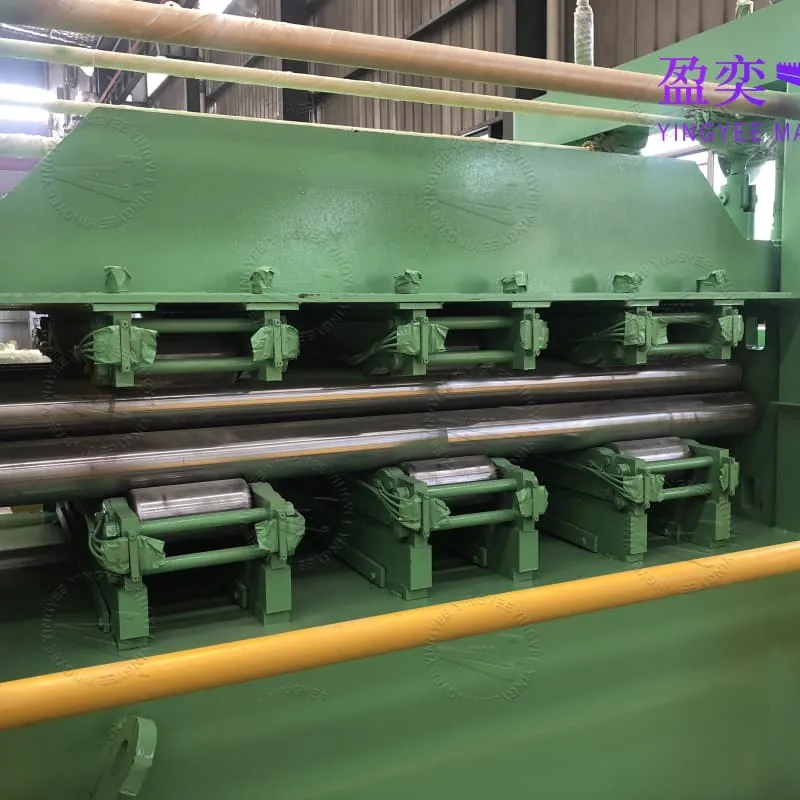
The structural integrity of a roll forming machine directly influences the quality of the finished product. This machine employs a guide column frame style, a design choice that ensures the machinery remains steady even when operating at its peak forming speed of 12-15m/min. Unlike standard frames, the guide column system prevents lateral deflection, which is essential when working with thin-gauge materials ranging from 0.2mm to 0.8mm.
Transmission efficiency is handled through a robust combination of gearboxes and chains. This drivetrain configuration is selected for its ability to deliver consistent torque across all 18 rows of forming rollers. By utilizing 45# steel with a chromed finish for the rollers and 40Cr material for the 76mm shafts, the equipment resists wear and deformation, ensuring that the round profile of the downpipe remains uniform across thousands of production cycles.

Precision Cutting Mechanisms: Flying Saw versus Mould Cutting
Cutting accuracy is the final determinant of a pipe's quality. Depending on the specific operational requirements, this system offers three distinct cutting modes: Hydraulic Cutting, Flying Saw Cutting, and Mould Cutting. The flying saw is particularly advantageous for high-volume production, as it allows the machine to cut the pipes without stopping the forming process, thereby maximizing the throughput speed.
The cutting blades are crafted from Cr12 mould steel and undergo a rigorous quenching treatment. This heat treatment process increases the hardness of the blade, preventing premature dulling when shearing through galvanized or pre-painted steel. The integration of a PLC-based frequency control system allows operators to synchronize the cutting cycle with the forming speed, ensuring that each downpipe is cut to the exact length requested by the client.
Material Compatibility and Operational Workflow for Rain Pipe Production
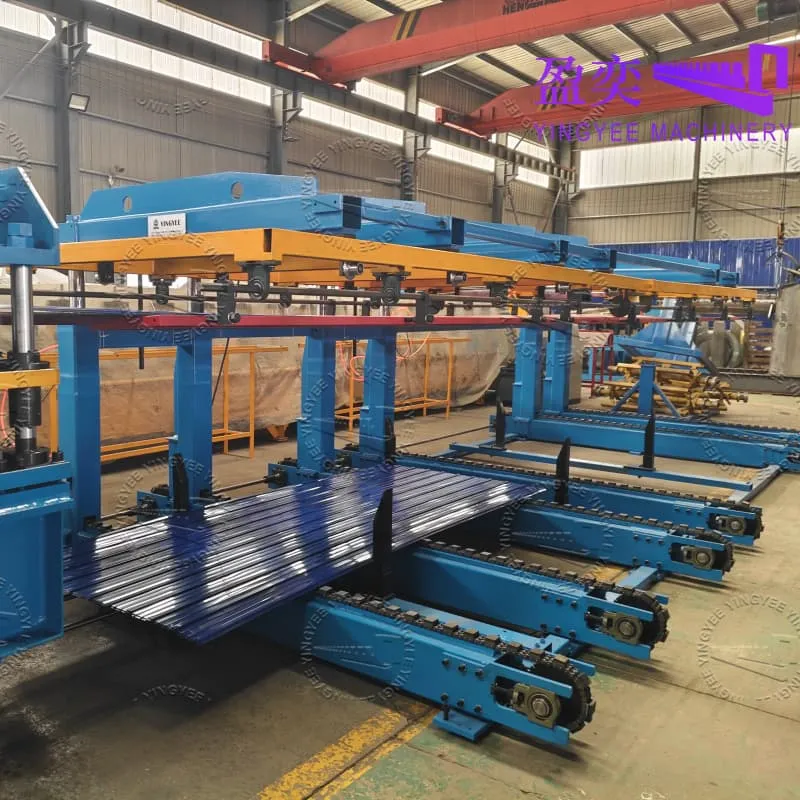
Versatility in material handling is a key requirement for international markets. This machinery is optimized for GI (Galvanized Iron) and PPGI (Pre-Painted Galvanized Iron), as well as Aluminum coils. The forming process is structured in a linear, logical flow to minimize handling time: starting from the Decoiler, moving through the Feeding Guide, passing through the Main Roll Forming Machine, and finally exiting via the Output Table after the PLC-controlled hydraulic cut.
To ensure a seamless setup, the machine operates on a standard 380V/3Phase/50Hz voltage, though customizations are available to meet local electrical standards. The 4KW main motor combined with a 3KW hydraulic station provides ample power to maintain a steady production pace of 200 sets per year, while the CE and ISO9001 certifications guarantee that the equipment adheres to international safety and quality benchmarks.
Technical Specification and Material Performance Matrix
| Component/Parameter | Specification Detail | Material Used | Performance Impact |
|---|---|---|---|
| Forming Rollers | 18 Rows | 45# Steel (Chromed) | High Wear Resistance |
| Cutting Blade | Quenched Treatment | Cr12 Mould Steel | Precision Shearing |
| Drive Shaft | 76mm Diameter | 40Cr Alloy Steel | Torsional Stability |
| Control System | PLC Touch Screen | Electronic/Digital | Automated Accuracy |
| Raw Material | 0.2-0.8mm Thick | GI / PPGI / Al | Broad Application |
Evaluating Supplier Capabilities for Metal Processing Equipment
When sourcing from a china sheet metal shearing wholesaler, professional buyers must look beyond the price point to evaluate the underlying engineering support. A reliable supplier provides not only the hardware but also the necessary installation and training services. For instance, the availability of overseas engineers ensures that the transition from delivery to full production is managed without technical delays.
Customization of the interface and the ability to match specific technology standards are critical indicators of a manufacturer's expertise. A strong focus on international business rules and regulations ensures that the equipment arrives with the correct documentation and meets the legal requirements of the destination country, reducing the risk of customs delays or compliance issues during the installation phase.
Future Trends in Automated Downpipe Manufacturing
The trajectory of the rain pipe industry is moving toward complete automation and the reduction of manual intervention. The shift toward PLC-integrated systems allows for "smart" production where the machine can automatically adjust to different coil thicknesses and lengths without manual recalibration. This not only increases the forming speed but also significantly lowers the error rate in mass production.
Furthermore, there is an increasing demand for sustainable materials. Future iterations of roll forming machinery are being designed to handle thinner, high-strength alloys that provide the same structural rigidity as thicker steel while reducing the overall weight of the downspout. By focusing on interface customization and effective communication, manufacturers can help clients adapt their production lines to these emerging market trends quickly.
Technical FAQ: Round Downpipe Production
What is the primary advantage of the guide column frame style in this machine?
The guide column frame style provides superior structural stability and minimizes vibration during the forming process. This ensures that the round pipes are produced with consistent dimensions and a smooth finish, even at higher operating speeds.
Can this machine process materials other than galvanized steel?
Yes, the machine is compatible with PPGI (Pre-Painted Galvanized Iron) and Aluminum coils, provided the material thickness falls within the 0.2mm to 0.8mm range.
How does the flying saw cutting mode differ from hydraulic cutting?
Hydraulic cutting typically requires the forming process to pause momentarily for the cut. In contrast, flying saw cutting allows the machine to continue forming the pipe while the saw moves with the material to perform the cut, significantly increasing overall productivity.
What maintenance is required for the Cr12 cutting blades?
While the Cr12 mould steel is quenched for high hardness, blades should be inspected regularly for wear. Because they are designed for high-precision shearing, periodic sharpening or replacement is necessary to maintain clean edges and prevent burrs on the pipe ends.
Does the company provide support for overseas installations?
Yes, engineers are available for overseas service to assist with installation and training. Additionally, detailed manuals and using guides are provided for clients who opt for independent installation.
What certifications does this equipment carry for international export?
The equipment is manufactured according to ISO producing certifications and carries the CE certification, ensuring it meets European safety and quality standards for industrial machinery.
Technical Resources & Industry Standards
- ISO Standards for Industrial Machinery Quality
- European Commission CE Marking Requirements
- ASTM International Material Specifications for Galvanized Steel
- World Steel Association - Metal Processing Trends
Selecting the right rain pipe roll forming machine is a balance of precision, speed, and durability. By focusing on high-grade materials like Cr12 and 40Cr and utilizing a guide column frame, manufacturers can ensure long-term operational reliability and superior product quality for the global market.
Related Industrial Equipment News





 English
 Afrikaans
 Albanian
 Amharic
 Arabic
 Armenian
 Azerbaijani
 Basque
 Belarusian
 Bengali
 Bosnian
 Bulgarian
 Catalan
 Cebuano
 China
 China (Taiwan)
 Corsican
 Croatian
 Czech
 Danish
 Dutch
 Esperanto
 Estonian
 Finnish
 French
 Frisian
 Galician
 Georgian
 German
 Greek
 Gujarati
 Haitian Creole
 Hausa
 Hawaiian
 Hebrew
 Hindi
 Miao
 Hungarian
 Icelandic
 Igbo
 Indonesian
 Irish
 Italian
 Japanese
 Javanese
 Kannada
 Kazakh
 Khmer
 Rwandese
 Korean
 Kurdish
 Kyrgyz
 Lao
 Latin
 Latvian
 Lithuanian
 Luxembourgish
 Macedonian
 Malgashi
 Malay
 Malayalam
 Maltese
 Maori
 Marathi
 Mongolian
 Myanmar
 Nepali
 Norwegian
 Norwegian
 Occitan
 Pashto
 Persian
 Polish
 Portuguese
 Punjabi
 Romanian
 Russian
 Samoan
 Scottish Gaelic
 Serbian
 Sesotho
 Shona
 Sindhi
 Sinhala
 Slovak
 Slovenian
 Somali
 Spanish
 Sundanese
 Swahili
 Swedish
 Tagalog
 Tajik
 Tamil
 Tatar
 Telugu
 Thai
 Turkish
 Turkmen
 Ukrainian
 Urdu
 Uighur
 Uzbek
 Vietnamese
 Welsh
 Bantu
 Yiddish
 Yoruba
 Zulu